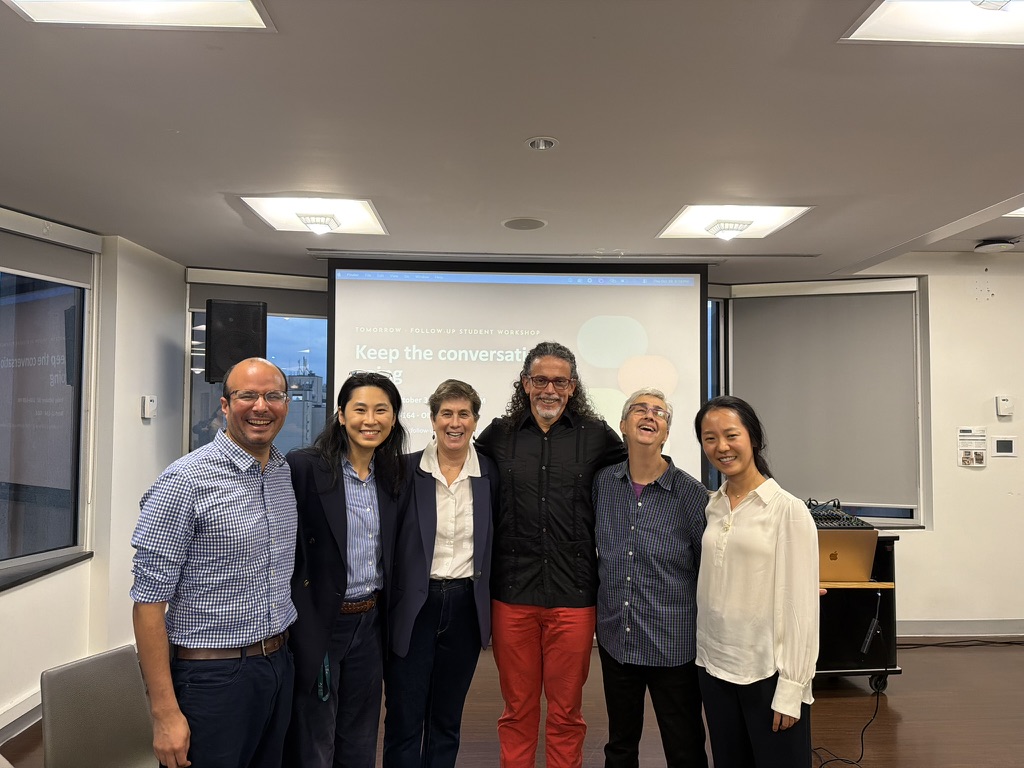
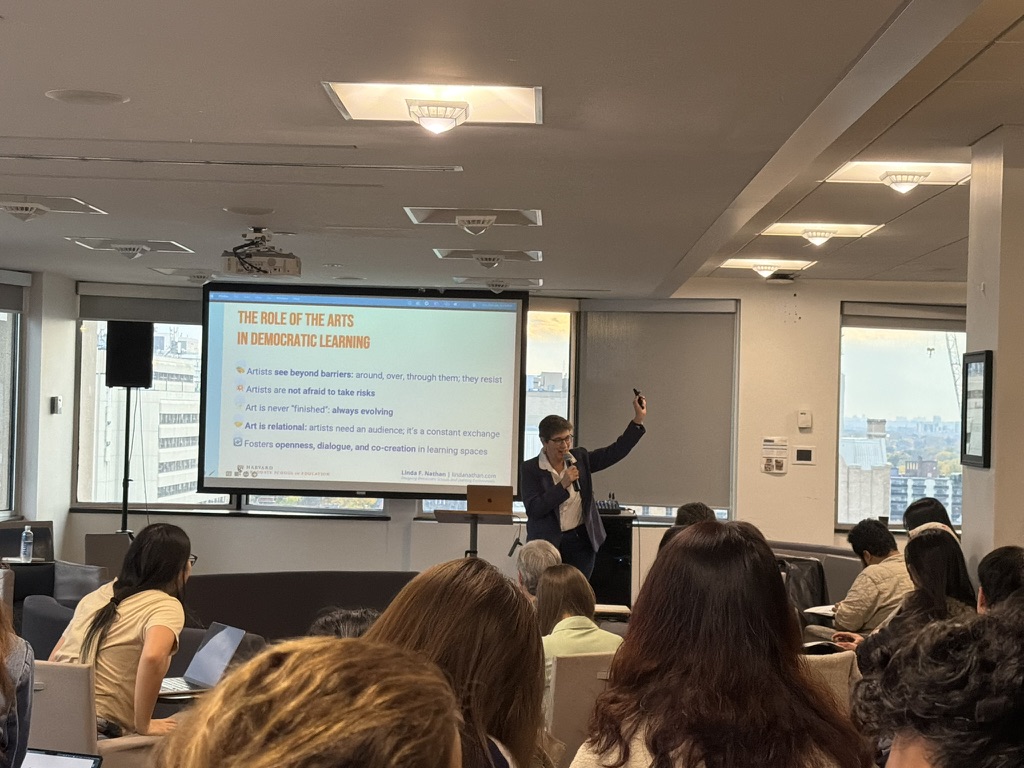
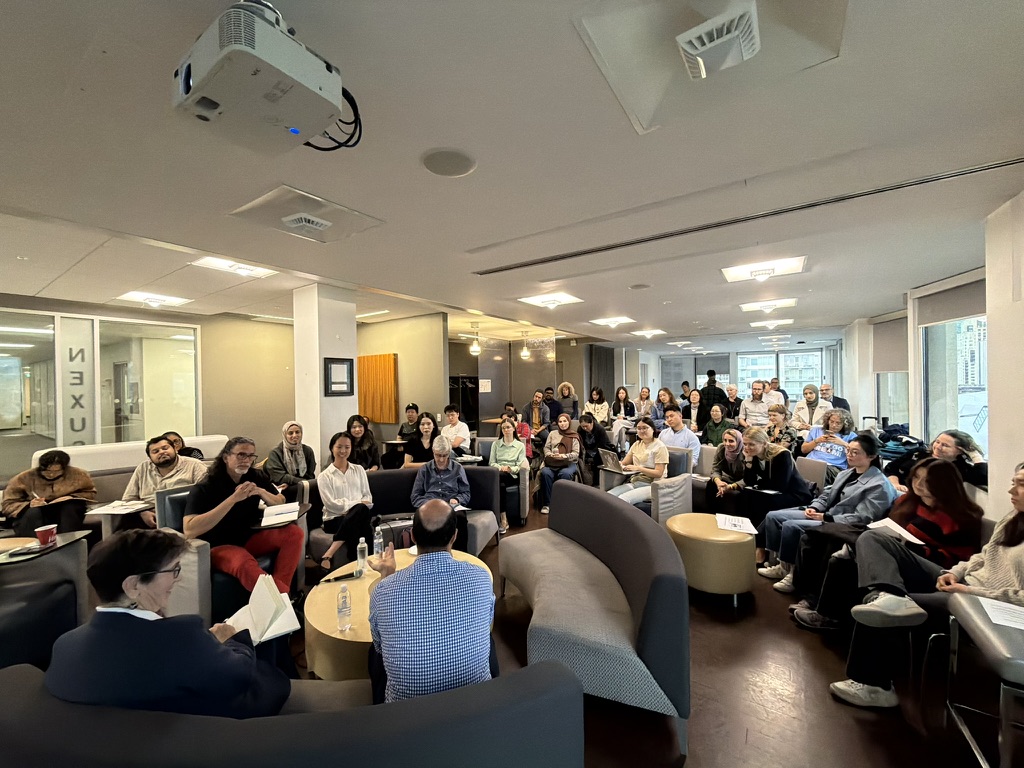
Recently, the five pillars of democratic education accompanied me to the Ontario Institute of Educational Studies (OISE) at the University of Toronto. I was here over a decade ago as the guest of Ruben Gaztambide-Fernandez, when he was finishing his study of arts high schools in Canada. I first met Ruben in 2000 when he was a doctoral student at HGSE and conducted qualitative research at Boston Arts Academy where I was the founding head of school. His work was provocative and helpful, and I still remember some of the insightful questions he asked us about our practices: What is the role of an orchestra in an arts high school? Can an orchestra be a force for democratic learning? It felt like a full circle moment to return to campus to talk with students about the ways in which I’ve seen these pillars live and breathe in various school and out of school contexts.
Some of the questions that framed my talk were: Has the mission of democratic education shifted as the world has changed? How do modern conceptions of power influence our praxis of democratic education? What are the cutting-edge debates researchers and practitioners are navigating today? And how do we ground an ethical framework for our practice and find solidarity and hope?
This time, I was the guest of Lydia Cao, assistant professor, and Franco Mosso Cobian, doctoral student . Both are former graduate students of mine. Lydia studies the ways AI might or might not change education and how important it is to engage with students about how they think about AI (Pillar 1). Franco studies studies youth movements and the common good (pillar 3), and the ways in which he listens to young people reminded me so much of the way Ruben listened to us so many years ago. Both are chapter authors in my book Designing Democratic Schools and Learning Environments: A Global Perspective.
I write and think about how these practices of democratic education are implemented (or not) in schools and also in “third spaces”– a term sometimes used to describe where young people are learning outside of school. Yet, I also am reminded that these pillars are relational. They are ways to show up in the world–how we think about decision making (shared or not?)? How we think about identity, culture, language and the common good? When and how do we demonstrate resilience and even resist oppressive forces? This trip with former students and colleagues was deeply personal and relational.
It was so energizing to ask one another: What does it take to build and sustain democratic learning spaces? I hope that my experiences helped deepen the conversation that is clearly on-going at the University of Toronto among and between students and faculty. I’m sure that the participation of Ruben, Lydia and Franco and their wonderful OISE colleagues (Kathy Bickmore and Hye-Su Kuk) made it all come alive. Thank you!